

Retention: making efforts that the employees stay in the company and do not leave: to competitors, or abroad.

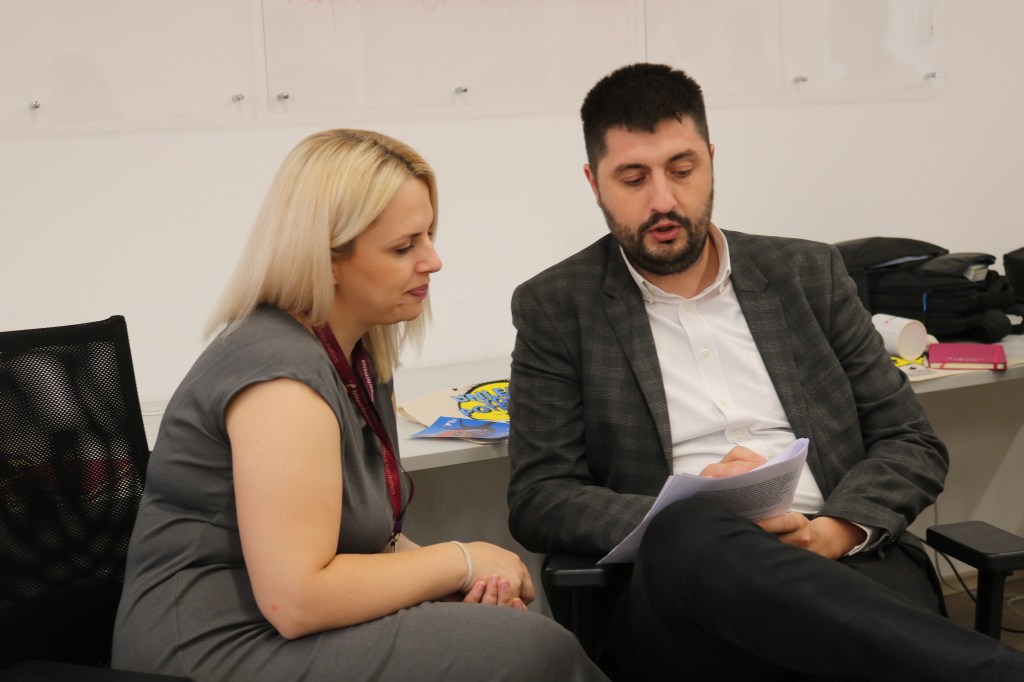
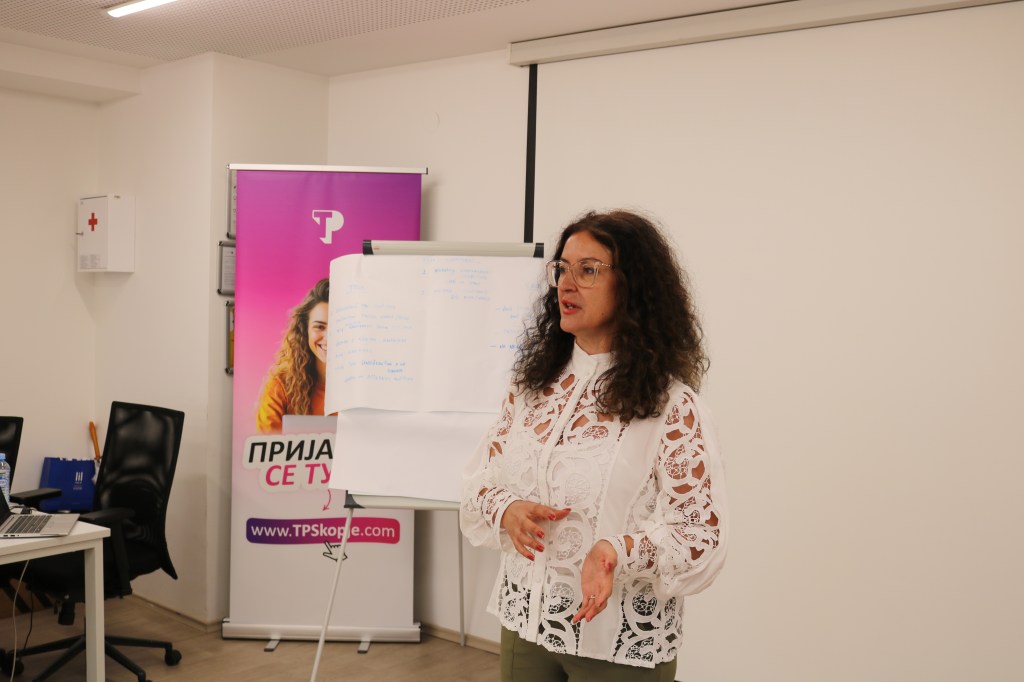
HR experts from industry and services discussed a wide range of possible measures, from kindergarten for young parents to testing the comfort of work cloths.
For quite some HR managers, the retention rate is part of their target agreement. Some calculated the cost of losing one employee: to hire another one, to train him and to compensate till he is on the same efficiency level, one yearly salary might be spent.
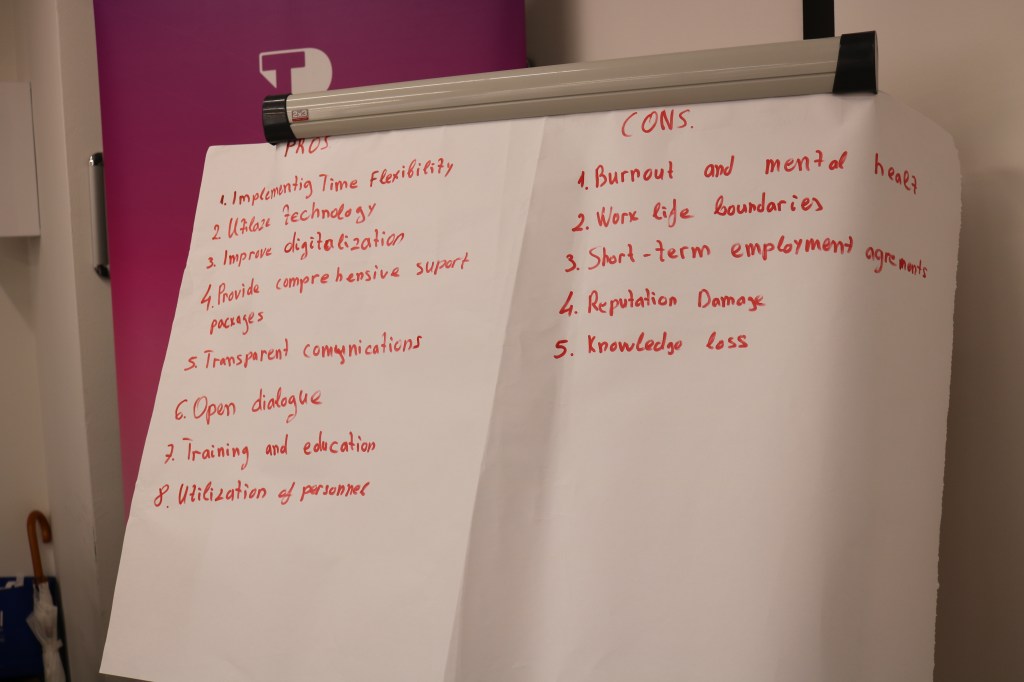
According to the theory, strengthening satisfiers, but even more eliminating dissatisfiers, is a key component for retention. Getting to know the dissatisfiers is a critical, sometimes painful process for a company. An employee satisfaction study and a 360-degree review of management can help.
Showing how simple problems like room temperature are handled shows the “retention” quality of management.
How a company solves simple issues, like shift arrangements or the room temperature, is a sign of the “retention” quality of management. Because every person has a different idea what this temperature is, plus company goals concerning energy savings or equality between the workforce in an office and working in production environment. Offering several options and adapted work cloths can be a solution.
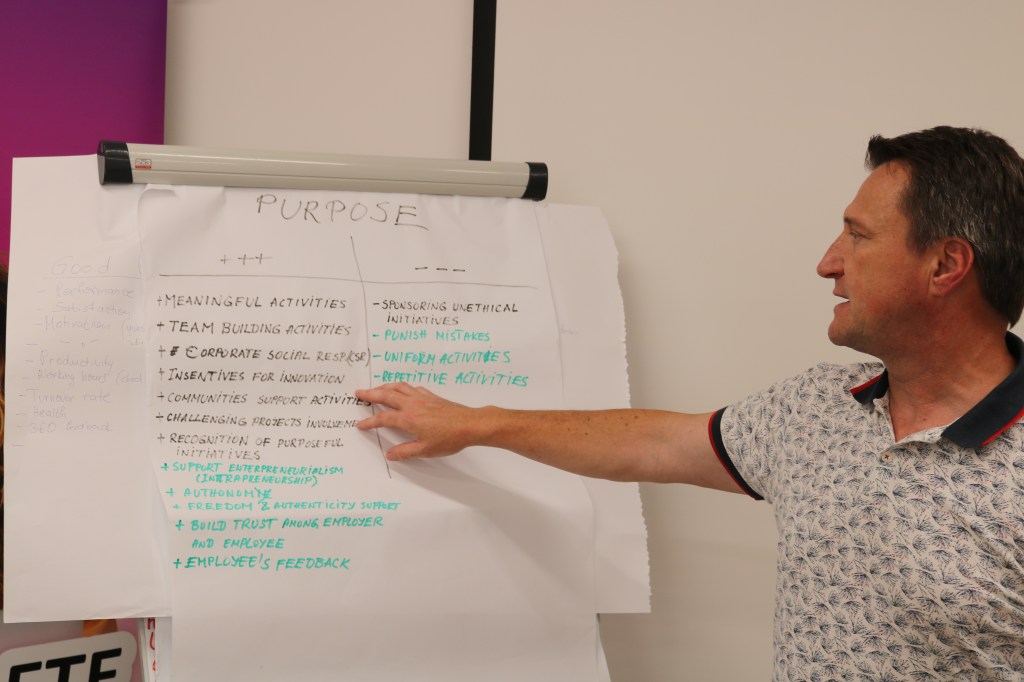
“Purpose” – why do i get up and go to work – becomes more and more important for the younger generations who can choose between different job offers at similar salary levels.
Purpose was discussed as a key aspect: why am i working here? For many professions, from education to health, purpose is the key aspect for employment. It helps if all team members have a broad view of the products and services, from product testing to meeting suppliers and clients. The younger generation, who has a wider choice of offers at similar salary levels than their ancestors, is taking this into account. And once the basic needs like income, health insurance etc. are covered, higher aspirations make the difference.
In the workshop, Prof. Nada Zupan presented her study on retention in the context of the EU-funded international Horizon project GETM4.
Interested professionals who want to participate in future workshops can register here and apply for participation.
 Belgian-Macedonian Business Club
Leave a comment