

The Schengen area increases: Romania and Bulgaria joined on January 1st as full members in a Europe without borders. Named after a small village in Luxembourg with 5000 inhabitants, it is the largest free travel area in the world for over 400 million citizens. It will also allow free travel from the Baltics to Greece, as opposed via Serbia and North Macedonia.
Schengen is the name of a small village in Luxembourg, on the border with Germany and France, where the Schengen Agreement and the Schengen Convention were signed in 1985 and in 1990 respectively. Systematic border controls have been abolished, member states are only allowed to reintroduce controls at certain internal borders in case of exceptional circumstances and for a limited time.
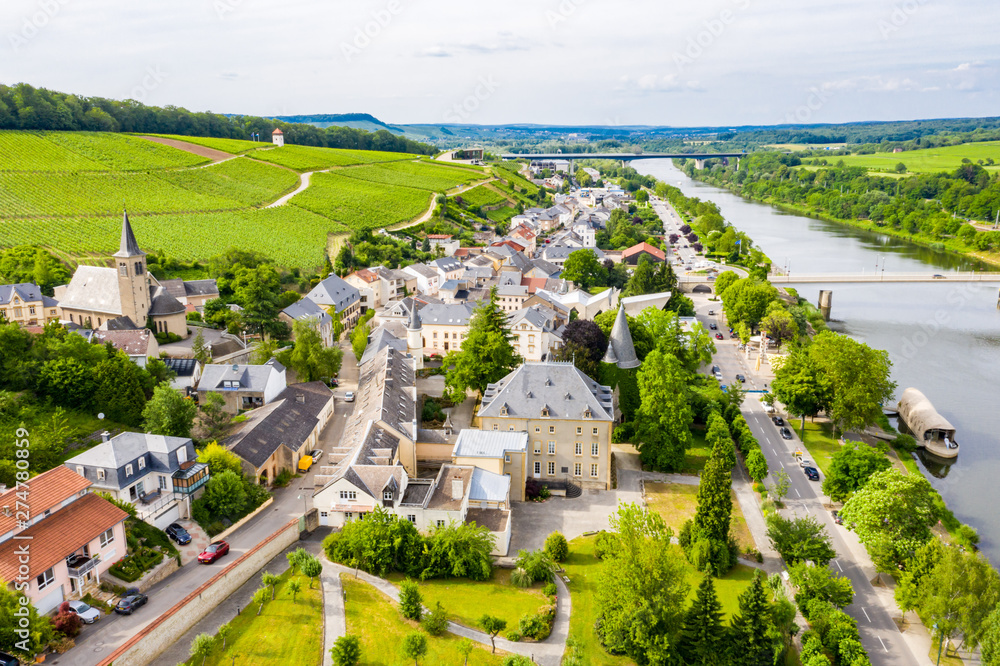


Every day around 3.5 million people cross internal borders for work or study or to visit families and friends, and almost 1.7 million people reside in one Schengen country while working in another. Abolishing border controls is valid for everyone: Non-EU nationals living in or visiting the EU as tourists, exchange students or for business purposes can also travel through the Schengen countries without going through border controls. For travelers transiting through or intending to stay in the Schengen area for a short period, the EU has established common visa rules.
The Schengen area started in 1985 as an intergovernmental project between five EU countries – France, Germany, Belgium, the Netherlands and Luxembourg – and has gradually expanded to become the largest free travel area in the world. Up to 2025, the Schengen conditions for Romania and Bulgaria were only given to air travel.
Schengen is an important part for Europe: state borders reduce to administrative limits. Towns might have belonged to one or another country in the past, but now they are not separated any more by barriers and controls.
A day will come when (a trip) between Paris and London, between St. Petersburg and Berlin, between Vienna and Turin will be (as easy) as today between Rouen and Amiens, between Boston and Philadelphia.
Victor Hugo, Opening speech at the peace conference 1849 (adapted)
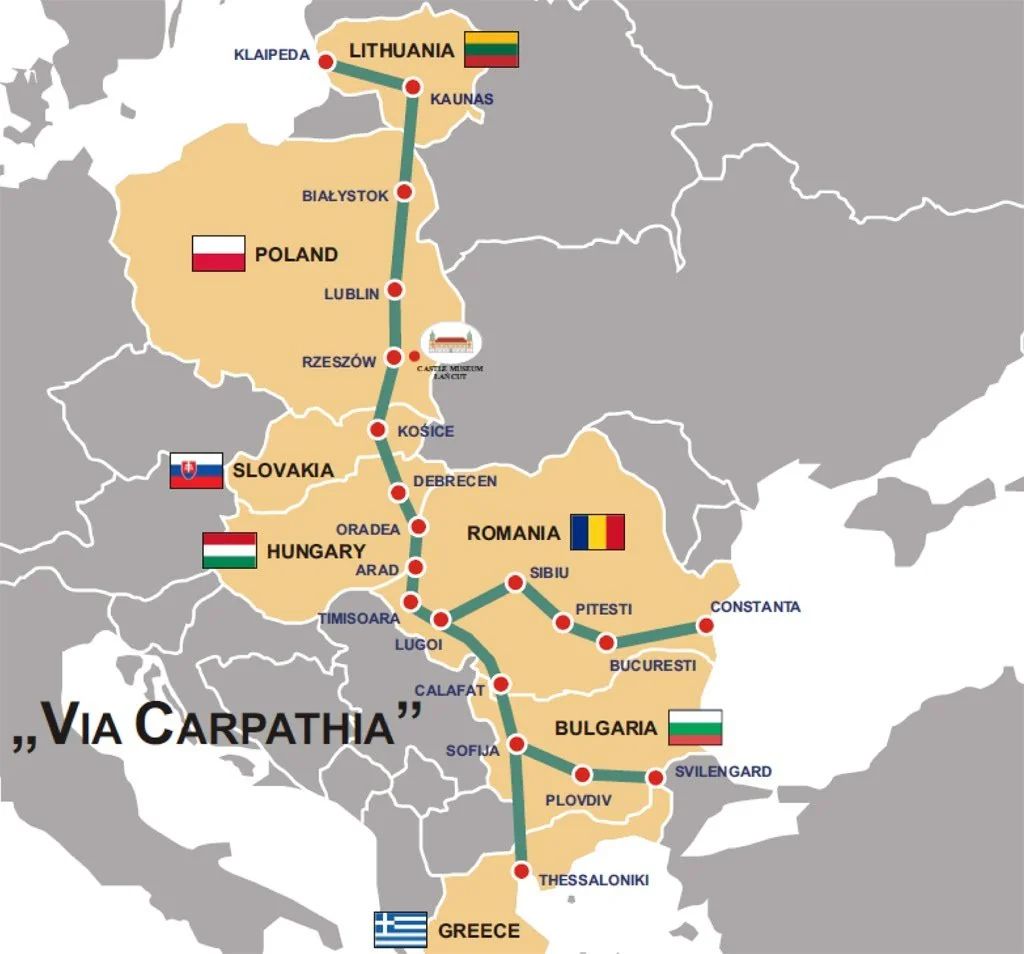
With the entry of Romania and Bulgaria, a new route, European corridor IV, became hassle-free. The “Via Carpathia” allows to travel from the Baltics to Greece without a border stop.
Read the full article in Nezavisen.mk
For Greece, the connection to the Schengen area and the Via Carpathia link is currently the most important international land project that will provide access to the markets of Northern and Central and Eastern Europe. The link will compete with other north-south links that pass, for example, through North Macedonia and Serbia.
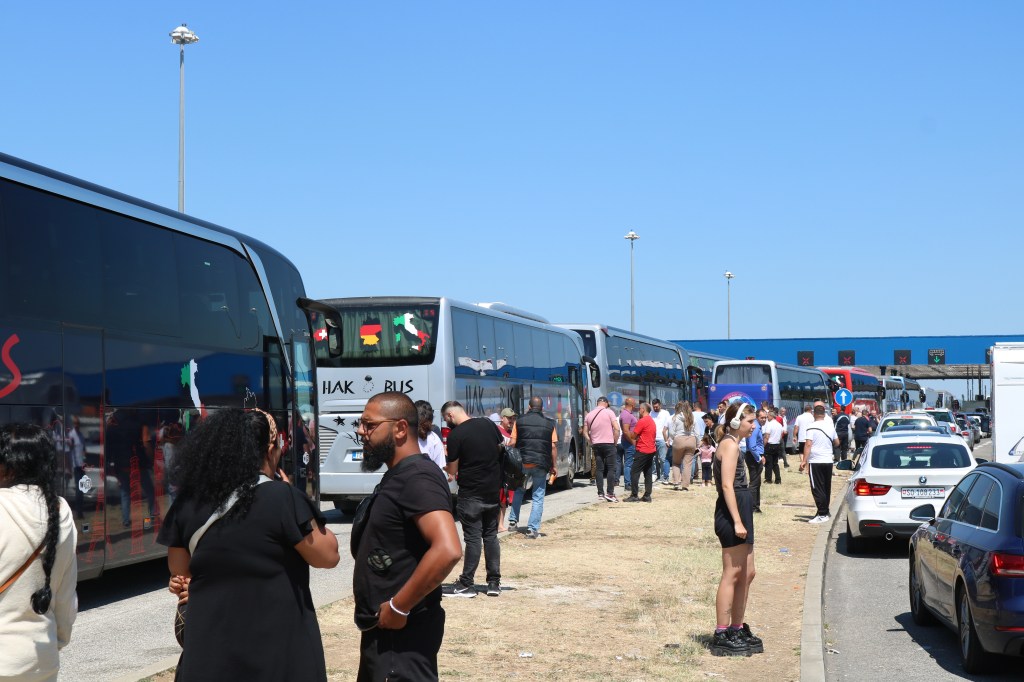
This affects not only the toll collected, but also the economy in general, because travelers spend money while passing through, get to know the country, tourism develops and local business is encouraged. At the time, according to estimates, truck traffic through Serbia was reduced by 30 percent in two years, despite the fact that Corridor X offers a shorter route and better gas stations and parking lots. The problem then and now was the expensive tolls, but above all the excessively long waits at the many borders across the Balkans due to customs and other controls.
“For Thessaloniki itself, as an economic and logistical center, ‘Via Carpathia’ is a kind of ‘gift from heaven‘”
Grigoris Zarotiadis, Aristotle University of Thessaloniki
In Bulgaria, significant economic benefits are expected and, according to estimates, Bulgaria’s GDP should grow by at least 10 percent. The financial impact is estimated at 800 million euros per year, with hundreds of thousands of hours of time saved and a significant reduction in carbon emissions expected due to shorter waiting times at the border. Among the main beneficiaries would be heavy road transport and manufacturers, as well as exporters of goods, whose direct costs are estimated at 432 million euros. A significant contribution would also be noted in the tourism sector. On the first day of the New Year, hundreds of Bulgarians went to Thessaloniki for a coffee or a lunch of seafood delicacies.
 Belgian-Macedonian Business Club
Leave a comment