The Belgium and North Macedonia have several issues in common. Multilingualism is one of them. And both countries gained their independence from their neighbors. A journey into constitutional history.
Originally drafted during the birth of modern Belgium in 1831, the constitution has evolved to balance competing regional identities, uphold democratic principles, and maintain social cohesion in a multilingual federal state.
One of the constitution’s most distinctive features is its accommodation of Belgium’s linguistic and cultural diversity through federalism. Unlike unitary states, Belgium is divided constitutionally into three language-based Communities (Flemish, French, and German-speaking) and three territorial Regions (Flanders, Wallonia, and Brussels-Capital).
This dual system of Communities and Regions, entrenched in constitutional articles, acknowledges and institutionalizes Belgium’s linguistic cleavages, allowing self-government in cultural, educational, and language affairs by the Communities, while the Regions manage economic, environmental, and territorial matters.
Unlike many other national charters, the Belgian Constitution enshrines social and economic rights in explicit terms. Article 23, for example, guarantees rights such as employment, social security, decent housing, health care, and environmental protection. This progressive inclusion reflects Belgium’s commitment to social welfare principles alongside liberal freedoms.
The Constitution also guarantees the right to education choice, reflecting the pluralistic nature of Belgian society, where both public and private (often faith-based) schooling coexist. Additionally, specific provisions ensure that Catholicism has a privileged but constitutionally bounded status, a vestige of the historical compromise between religious and liberal forces.
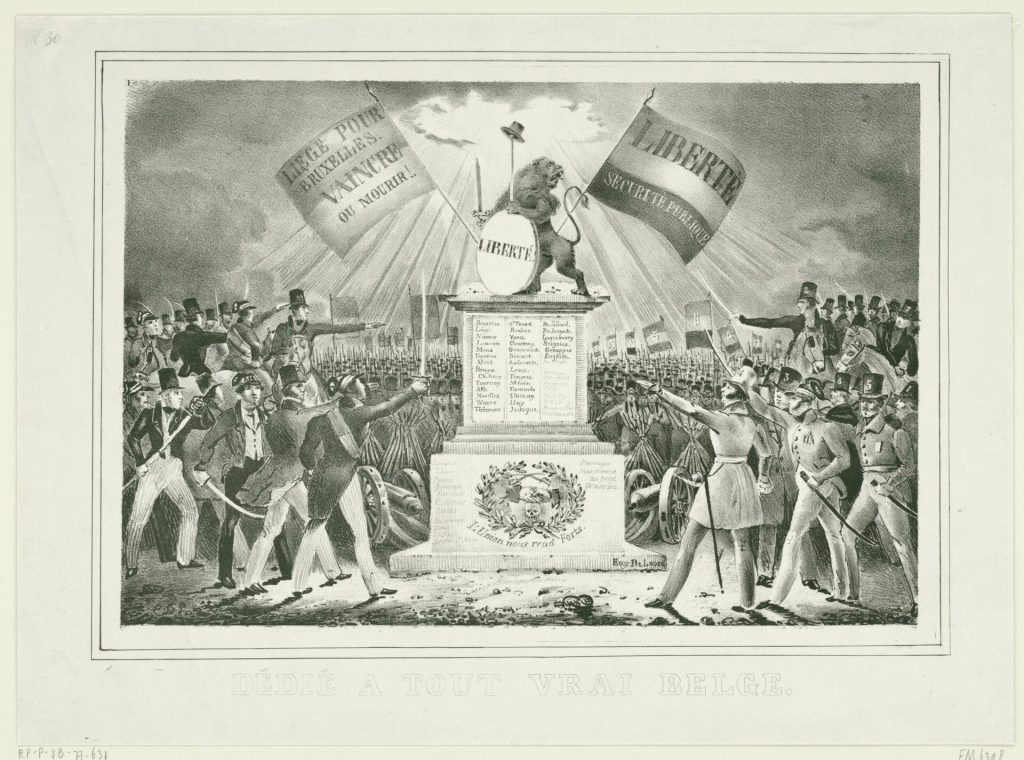
On 25 August 1830, a group of rioters gathered in Brussels, leading to an open revolt against the Dutch Government. Belgium’s Provisional Government proclaimed the country independent on 4 October 1830. On 6 October 1830, a Constitutional Commission met to work out a draft. It took them just ten days (until 16 October) to come up with the draft.
Brussels Morning: Belgium: unique federalism rights and pluralism explained
Brussels Times: Belgian Constitution
 Belgian-Macedonian Business Club
Leave a comment