
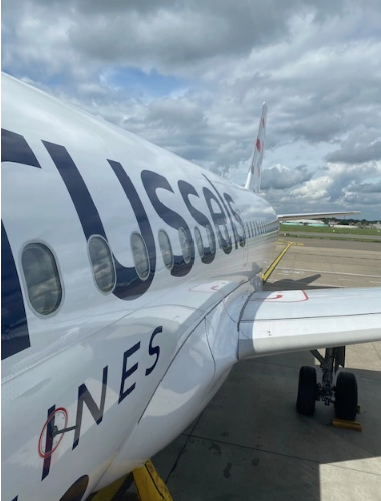
Belgium has secured a landmark position in Europe’s clean energy future: North Sea Port in Ghent has been chosen as the site for the continent’s first commercial-scale Sustainable Aviation Fuel (SAF) facility based on Alcohol-to-Jet (ATJ) technology. The announcement was made on 11 May 2026 by LanzaTech Global, a member of the FLITE (Fuel via Low carbon Integrated Technology from Ethanol) consortium, backed by EU Horizon 2020 funding. This €500 million project will produce 79 000 tonnes of SAF and 9 000 tonnes of renewable diesel annually, targeting operational status before the end of the decade.
But what exactly is SAF, and why does it matter?
Sustainable Aviation Fuel is a drop-in alternative to conventional jet fuel, produced from renewable or waste-based feedstocks rather than fossil fuels.
The ATJ process used in this project converts ethanol — in this case sourced in part from ArcelorMittal’s adjacent Steelanol plant, which captures CO₂ waste emissions from steel production — into jet fuel. SAF can be used in existing aircraft engines without modification, making it one of the most practical near-term tools for decarbonising the aviation sector, which currently accounts for around 2–3% of global CO₂ emissions.
The urgency of scaling SAF production is underscored by tightening international regulations. The Ghent facility has been designed to comply with CORSIA (the global aviation carbon offsetting scheme), the EU’s ReFuelEU Aviation mandate, and the UK SAF Mandate — frameworks that collectively require airlines to blend increasing proportions of SAF into their fuel supply in the coming years. With global demand for SAF set to vastly outpace current supply, Europe’s first commercial ATJ plant in Belgium positions the country as a key node in the emerging green aviation supply chain.
Ghent’s selection reflects strong strategic logic. North Sea Port offers mature multimodal infrastructure — shipping, rail, inland waterways, road, and pipelines — and sits within a dense industrial ecosystem that reduces both development risk and logistics costs. The FLITE project will generate approximately 300 construction jobs over a three-year build period and around 50 permanent high-skilled positions once operational, with local businesses invited to participate in tendering. As North Sea Port CEO Cas König noted, the project aligns directly with the port’s Impact 2030 sustainability plan and the wider climate ambitions of the City of Ghent and the Province of Flanders.
For the business community, this development signals meaningful opportunity. Belgium is consolidating its role as a European hub for sustainable industrial innovation, and the FLITE project exemplifies the kind of green industrial partnerships and supply chain investments that both countries can explore together. As aviation decarbonisation becomes a regulatory and commercial imperative across Europe and beyond, early engagement with the SAF ecosystem — whether in feedstock supply, logistics, financing, or technology — offers real and growing business potential for companies on both sides of this bilateral relationship.
Sources:
Leave a Reply