
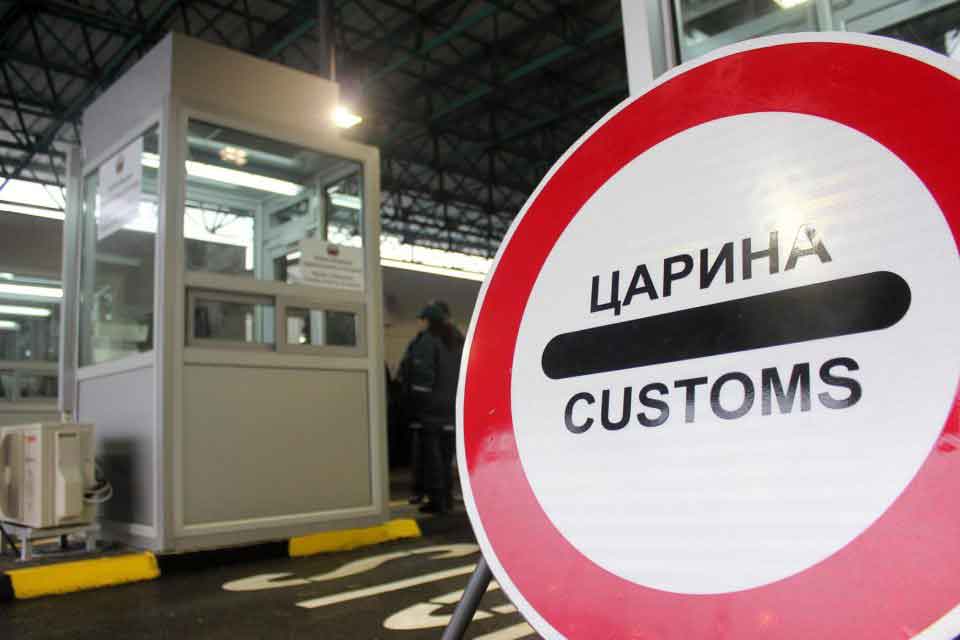
It is a common practice of the government in collaboration with economic chambers: certain customs rates are lowered if they are not favorable for exporters. The bilateral chambers, the Foreign Investment Council and other representations play an important role in this process.
A small country that is not member of a customs union faces a specific issue: it has to define customs rates. And there is not one, but in theory up to one million tariffs to define, each HS code can carry a different customs rate.
Why are there different customs rates?
Customs rates were introduced for two reasons: earning money, and to protect the local industry. Many customs rates date back from the Yugoslav times. The national industry was protected from foreign imports, eg. textiles. Other customs rates existed to make goods expensive to avoid high consumption and outflow of foreign currency, eg. on vehicles.
The successor states to Yugoslavia often kept the rates or at least, did not challenge them: why bother for the import of Austrian Almdudler to North Macedonia?
Example HS 220210 Waters, including mineral waters and aerated waters, containing added sugar or other sweetening matter or flavoured, and other non-alcoholic beverages, not including fruit, nut or vegetable juices of heading 2009:
Coming from WTO countries it would carry a 40 % duty rate, from EU a 20 % duty rate but if there is still a remaining quota of 417 500 l, it would be customs free.
Where is the problem for exporters when EU does not levy customs for goods from CEFTA?
In principle, there is no problem for exporters as the EU has an agreement with CEFTA Central European Free Trade area – North Macedonia is part of it – not to levy any customs The issue arises if a country imports goods which are used to produce other goods and there is customs on those goods to be paid, but EU would claim lower or no customs themselves when these goods come from a third country or the goods come from the EU.
Example: In the production of textiles, Japanese zippers are used. North Macedonia levies customs on the zippers, while the EU under the EU-Japan agreement does not. This makes those textiles more expensive compared to production in EU without those tariffs.
If the imported goods have a certain dimension and can be tracked, having a temporary import and storing them under “customs warehouse” regime would be an alternative possibility. This is eg. used for US transmission for vehicles reexported to the US or for textiles. But this creates other problems: tracking every Japanese zipper, or the above mentioned Almdudler liquid to produce ice cream, is very burdensome.
The country may recognize that for certain goods there is no financial interest and no local business to be protected and lower or abolish the customs on these items.
There are of course also cases where the Macedonian customs rate is lower than the EU rate. Then this might become an advantage for manufacturers as long as the goods remain a Macedonian product under country of origin rules.
Economic associations like bilateral chambers or FIC regularly collect issues from their member companies and present them to the Ministry of Finance. After verification, the Ministry very often agrees to lower or eliminates those rates, like currently effective July 1st in favor of the automotive, metal-processing industry and metallurgy industries. (See announcement here).
What is the Harmonized System Code (HS Code)?
The Harmonized System (HS) is an international nomenclature developed by the World Customs Organization (WCO). It serves as a standardized method for classifying goods traded across borders. The HS code is a 6-digit number that identifies the category of a product, allowing customs authorities to apply the correct tariffs, taxes, and regulations.
The HS code is hierarchical and organized into 21 sections, which are further divided into 99 chapters. Each chapter covers a specific category of goods, such as animals, textiles, machinery, or chemicals. The 6-digit HS code is structured as follows:
- First 2 Digits (Chapter): Broad category (e.g., 01 = Live Animals).
- Next 2 Digits (Heading): Subcategory within the chapter (e.g., 0101 = Live Horses).
- Last 2 Digits (Subheading): Further refinement (e.g., 0101.21 = Purebred Breeding Horses).
Example: HS Code for Coffee
| HS Code | Description |
|---|---|
| 09 | Coffee, Tea, Mate, and Spices |
| 0901 | Coffee, whether or not roasted |
| 0901.11 | Coffee, not roasted, not decaffeinated |
The EU uses the 8-digit TARIC code (e.g. 0901.1100). It is the HS Code with two digits added for trade preferences (eg. free trade agreements) or non-tariff measures (eg. quotas).
- United States uses a 10-digit HTSUS code (e.g., 0901.11.0000)
- China uses a 10-digit Customs Code (e.g., 0901.1100.10).
both also based on HS Code with the appendix for certain classifications.
The WCO updates the HS system every 5 years (e.g., HS 2022, HS 2027). Local extensions like TARIC or HTSUS update very frequently.
How to Find the Correct HS Code
- Consult Official Sources:
- World Customs Organization (WCO) HS Database
- National customs websites (e.g., EU TARIC, US HTSUS)
- Use HS Code Search Tools:
- Online databases like HS Code Search or Trade Map.
- Customs brokers or trade compliance software.
- Seek Expert Advice:
- Consult customs brokers, trade compliance consultants, or chambers of commerce for complex classifications.
Do you have a customs issue? Contact your chamber to discuss possible solutions. Take into account that the process might take between six and 18 months, but might still result in significant savings for your company.
Leave a Reply