
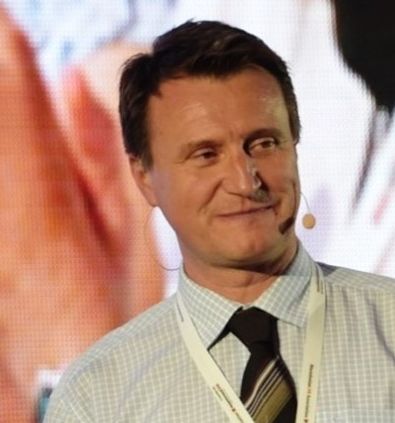
We don’t miss people. We lack awareness and concrete measures to keep and bring back those who have left.
Darko Petrovski is the President of the Macedonian HR association and member of the board of the EAPM European HR Association . In this function, he is co-author of the “Human Capital Challenge – How to Source, Reward, Retain, and Develop a Qualified Workforce”
Mr. Petrovski, you are an expert engaged in issues related to the labor market and human resources management. This interview is dedicated to the problem that has become dominant for the business sector in the country – how to find an adequate workforce with the necessary knowledge and skills in a situation when that workforce is fluctuating, unstable and is ready to easily go abroad. This problem is current and has not been around since yesterday. How did the Macedonian economy get into this situation?
Darko Petrovski: As a man who has been in business for almost 35 years and a business advisor and manager with many years of experience in the corporate sector and in foreign trade, with broad insights into the movements related to the workforce and labor markets not only in our country but also in our region and in Europe, almost 10 years ago I began to point out demographic-economic-technological trends, the risks of reducing the available human capital and the need for changes in attitudes among Macedonian employers. And I was right because in just a few years from a labor market with huge unemployment we very quickly came to a situation where employees were being sought “under wood and under stone”.
My diagnosis was based primarily on the shortsightedness and comfort of the owners and top management of Macedonian companies who were accustomed to the idea that for every vacant or new job opening, all they had to do was wink and dozens, even hundreds, of job seekers would line up in front of them, and in a situation of such a large supply, a suitable solution would always be found. Their arrogant position went so far as to allow themselves not to invest in the working environment to provide decent working conditions, in the development of their employees, and even in maintaining the status quo in terms of salaries and employee rewards for their contribution to creating added value and generating profits.
In parallel, very few companies predominantly owned by Macedonian businessmen worked on developing their own products and services, on conquering foreign markets with competitive offers and projects and by appropriately adjusting their capacities, processes and organizational culture that would support the development of competencies, engagement and innovation. In such stagnation, state institutions also played their role by insufficiently improving the regulation and by controlling the situation on the ground to sanction the “arbitrariness” of employers, as well as educational institutions that “produced” profiles with outdated qualifications and competencies.
Therefore, it is not surprising that companies have not followed the trends in transforming their personnel departments into modern human resources and people management departments. After all, even today, when in the world this function is placed at the highest strategic level in companies, in our country it is still either performed by executive managers or assigned to insufficiently prepared administrative workers, and that only for a part of the working time.
What are your insights from communicating with the business sector regarding young people who are applying for jobs or getting hired today? What are their demands or expectations?
Darko Petrovski: What young people expect from their employers is no longer just an appropriate and comparable reward that they would receive as an alternative from another employer, but also a tidy working environment, flexibility with the employer in relation to their needs in private life and family, professional and career development, as well as challenge and meaning from their work. Moreover, Macedonian employers are not only competing with other local companies, but also companies in our entire region, including in Europe and the world. Global mobility of the workforce is no longer a myth, but a reality and all countries in the world are fighting for the best talents.
When considering today’s technological possibilities for remote work and the tectonic changes brought about by digitalization and automation of processes, accompanied by the strong penetration of artificial intelligence and the changes they bring to the world of work and to jobs and the necessary skills, the Macedonian sector faces serious challenges in finding and retaining a workforce. And to that I must mention the general conditions in our society which, unlike more developed countries, offers a lower general level of standards and functionality, as perhaps one of the key factors for young people’s thinking about organizing their lives with their families somewhere else.
Do young people demand and expect too much or are companies not flexible enough in their approach to such demands/expectations of young people?
Darko Petrovski: I believe that when we have two opposites, the truth is somewhere in between. On the side of companies, there is inflexibility, primarily due to outdated attitudes and the lack of systematic monitoring of modern trends, especially in terms of the expectations of young people such as the upcoming Generation Z.
I often hear complaints and criticisms from companies regarding young people, primarily that they do not possess the appropriate skills, that their behavior is inappropriate, that they cannot be relied upon, that they demand high salaries before they show initiative and results, and that they expect rapid career advancement and high positions… My impression is more that young people are impatient and I understand them because that is a characteristic of youth. They are just a product of us as their parents, teachers, mentors, and employers, including the technical and technological opportunities that the present realm offers.
The good thing is that there are solutions through good recognition of the root cause, common sense and joint action, aware that this is how we build our own legacy and future.
How prepared are enterprises, especially small and medium-sized ones, to respond to these expectations of the young workforce?
Darko Petrovski: The situation is changing, companies are already recognizing the need for systematic work in people management. For larger companies it is simpler, for small and medium-sized ones it is still a challenge. Enterprises with foreign or mixed ownership have a better understanding of the importance, and those with Macedonian ownership, unfortunately, with honorable exceptions, are still wandering and do not have a developed awareness of these issues.
Based on the Human Capital Challenge “HU-CA-THON” initiative that we implemented in 2023/24 with the participation of more than 50 human resource management professionals, we mapped 88 specific useful practices in the areas of talent acquisition, reward, retention and development, which set successful Macedonian companies apart from the rest and provide them with a competitive advantage over others in the Macedonian labor market. The report offers concrete solutions that can be skillfully and systematically used by enterprises, especially small and medium-sized ones, depending on the specific circumstances. We will continue to supplement this initiative with other areas and with the latest practices from everyday life.
From a human resources management perspective, what is the solution to the gap between the expectations of companies and the expectations of young people? What systemic changes should companies make? How to build loyalty and belonging among young employees in companies? This is not a prosaic question, but a question of competitiveness and long-term survival of Macedonian companies.
Darko Petrovski: Where there are people, there is an economy. We must retain talents, especially the top ones, as future carriers of the business development of Macedonian enterprises and the economy. And that must be the task of all stakeholders in our society, including enterprises.
We at my Talent Business Incubator Step-up developed scholarship programs for young business leaders about ten years ago in order to prepare them by developing their business and soft skills for rapid integration into the work environment and for quickly and successfully taking on key roles. We thought that today we would be able to work with dozens of young people, but we did not find companies willing to invest in this most expensive resource for every organization and country – young talents in the long term. I think the time has come and we will be happy to offer our full capacity.
To overcome the problem, how much can using the services of advisors who are experts in human resource management help companies?
Darko Petrovski: I recommend that companies that have already built or have the potential to build their own human resources management departments do so as soon as possible, constantly invest in their upgrading, and find a strategic place for them in their management structure.
For all smaller companies, hiring expert advisors and outsourcing certain processes for which they do not have or cannot build internal capacities is the right solution. This also applies to large companies when faced with complex transformation projects that require highly specialized expertise.
I believe that digitalization processes and the use of technical and software solutions for process automation and secure information and data management can greatly assist the transformation of enterprises.
The care for securing, developing and retaining the necessary human capital in our economy is the duty of all social actors, including enterprises. And the drivers of progress will be young top talents, a potential that we have always had and to which we must change our approach.
Interview published in Ekonomija i Biznes June 15, 2026. https://ekonomijaibiznis.mk/kade-shto-ima-lugeima-i-ekonomija/
Ekonomija i Biznis is the leading monthly economic magazine in Macedonian language
Leave a Reply