
When thinking about Belgium, beer and potatoes for fries will come to your mind before wine. But: people make the difference, and that is why wine and sparkling wine is also produced on the northern limit of the wine growing area. And 2026 is announced to be a top year.
In Belgium, 237 winegrowers produce on 695 hectars about 2 million liters. In comparison, in North Macedonia, 164 wineries produce 100 million liters of wine on 28 200 ha.
In 2026, not only is the quality of the grapes good, but the weather forecasts also look positive for the Belgian wine sector. “They predict changeable weather next week. That is very good for us. It offers prospects for higher quantity while maintaining quality.”
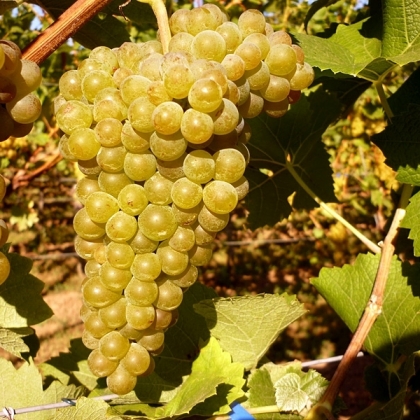
Due to the dry weather, the berries are somewhat smaller and harder than usual this year. They contain less juice, but as a result, the flavour is more concentrated in the limited moisture present in the fruit.
It is therefor interesting to compare what Belgian winegrowers make different. First in view, while in North Macedonia many wine growers sell to large wine companies, in Belgium, the growers produce the wine themselves. This gives a strong focus on quality.
Also, besides wine, a lot of sparkling wine is produced. Less sunlight means less sugar, which emphasizes the freshness of the grapes even further. 45 % of the total production goes into sparkling wine, 41 % is white wine and the rest is red and rosé. The chilly and relatively wet climate also explains the proliferation of mold and mildew resistant grape varieties, such as johanniter, regent and solaris. But also classic varieties like chardonnay, pinot varieties (including auxerrois), müller-thurgau are grown, resulting in a large diversity.
The biggest difference comes then in selling the products. Belgium has ten official appellations:

two Protected Geographical Indications
- Vlaamse Landwijn (Flemish Country Wine, 1)
- Vin de Pays des Jardins de Wallonie (Country Wine from the Gardens of Wallonia, 2)
and eight Protected Designations of Origin
- Hagelandse wijn (Wine from the Hageland area, near Brussels, 3)
- Haspengouwse wijn (Wine from the Haspengouw area, in the North East of Flanders, 4)
- Heuvellandse wijn (Wine from the Heuvelland area, near the South coast, 5)
- Côtes de Sambre et Meuse (Wine from the banks of the Sambre and Meuse, in Wallonia, 6)
- Maasvallei Limburg (unique in Europe: this PDO covers two countries – Belgium and the Netherlands, 7)
- Vlaamse Mousserende Kwaliteitswijn (Flemish Quality Sparkling Wine, 8)
- Vin Mousseux de Qualité de Wallonie (Quality Sparkling Wine from Wallonia, 9)
- Crémant de Wallonie, 10
The non-profit organization VZW Belgische Wijnbouwers (Federation of Belgian Winegrowers) has been working to
- improve the quality of Belgian wine
- create a professional framework in which winegrowers can optimally reap the benefits of their hard labor
- increase the awareness of Belgian wine among consumers at home and abroad
To this end, the association organizes numerous activities: interesting and useful training courses, events (such as this group stand at Prowein), bringing together wine growers with questions or needs, trying to clarify and simplify legislative and administrative matters, negotiating interesting group purchases, etc.
Leave a Reply