
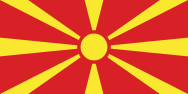
North Macedonia celebrates 8 September 1991 as Independence day (Ден на независноста). It was the day in independence referendum was held and after which the country become independent from then Yugoslavia.
“Are you for a sovereign and independent state of Macedonia, with a right to enter into any future alliance with the sovereign states of Yugoslavia?”
Referendum question
First multi-party elections were held in November 1990. On January 25th, 1991, the Macedonian Parliament adopted a “Declaration on the Sovereignty of the Socialist Republic of Macedonia”. It allowed authorities to maneuver in the deepening Yugoslav crisis, while the federal government was practically being ignored by the republics. With this document, the Parliament declared that the entire political, economic, and legal system would be based on the constitution of the republic and its laws.
The parliament voted for the independence referendum in August 1991. It was approved by 96 % of voters, with a turnout of 76 %.
Many voters boycotted the referendum because they did not agree to the “future alliance” option. They feared a possible future Serbian alliance.
What was the background to this referendum?
On May 6th, 1991 the Macedonian Saško Geđšovski from Kavadarci was killed in Split when he was on guard duty amid a protest. He was 19 years old and the circumstances of his death are still unclear. In total, 54 young Macedonians died as JNA conscripts. There has been a strong parent movement in the former Yugoslav republics to remove their sons from JNA service if the army went to war against each other. In Skopje the government even destroyed the mobilization papers sent from the federal army. Parents continued their protests for the return of the children from the JNA through mid-September, especially after many Macedonian troops in the JNA were transferred to an unknown location. The not very known memorial “Mother’s broken Wing” in Central Skopje remembers the fallen Macedonian soldiers in this war. (More here and here.)
Slovenia and Croatia had declared their independence on June 2th, 1991. A short war erupted when the JNA Yugoslav army fired against Slovene territorial defense units. The fights in Croatia and Bosnia and Herzegovina started as well.
It was the first time in modern times that the country became independent. For centuries, it was part of other empires, from Roman to Ottoman. The borders were the result of the Balkan wars 1912-1913. But ethnic Albanians also live in today’s Kosovo and Albania. Also the Albanian parties took part on any government since the independence, the relation between the two biggest ethnic groups is still not trouble-free. The war in Kosovo and 300 000 refugees did their own share to the issue, and it needed international help to settle, till it came to the Ohrid Framework agreement signed on August 13th, 2001.
The northern Greek regions are also carry the name: Eastern Macedonia, Central Macedonia with Thessaloniki and Western Macedonia. Thus an immediate discussion about the name of the country that needed till June 17th, 2018 to be settled when the official name of the country became “North Macedonia”, something that is still not accepted by all Macedonians.
And the border with Bulgaria? There was never a border till 1908 when Bulgaria declared independence. The border was drawn not taking into account what language people spoke or whatever they thought about their identity. The Treaty of Friendship, Good-Neighbourliness and Cooperation, ratified in 2018, should have created a framework to solve the issues. But relations with Bulgaria remained tense.
Despite many remaining issues with the neighboring states, the holiday should remember that the initial goal of the independence was achieved: preserve the country from a war. And that for many issues, a peaceful solution could be found by different agreements. None was perfect. Everyone was better than war.
Leave a Reply